Mark Wills sings a country song entitled Don’t Laugh at Me. I have it on my playlist, so I listen to it often. It is about acceptance of others who may be different than us. The refrain goes:
So don’t laugh at me, don’t call me names
Don’t get your pleasure from my pain
‘Cause in God’s eyes we’re all the same
Someday we’ll all have perfect wings
Don’t laugh at me
Is It Too Much to Ask?
His message encourages me in our ongoing challenge of discrimination that exists against people who are different. He sings about a little boy with glasses who is called the geek, a little girl who won’t smile because she has braces on her teeth and a disabled man who is overlooked. He implies that we laugh at others when we do not take the time to understand. The songwriter asks a simple question, “You don’t have to be my friend. Is it too much to ask? Don’t laugh at me.
My Cardboard Sign?
The verse that touches me most each time I hear it:
I lost my wife and little boy
When someone crossed that yellow line.
The day we laid ’em in the ground
Is the day I lost my mind
Right now I’m down to holdin’
This little cardboard sign
Don’t laugh at me….
Fill in Their Blanks
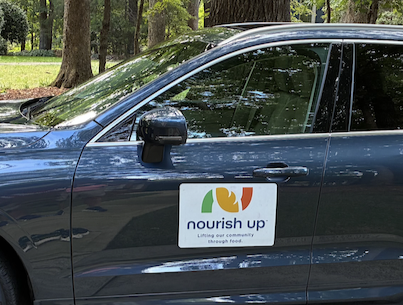
I regularly volunteer at the local food bank. I help load vehicles so groceries can be delivered directly to clients’ homes. As often as possible, I deliver the groceries, too. These provisions are meant for emergencies to support the recipients in a short term. Often we hear that people on the receiving end of these charitable deliveries are demeaned. They are often labeled as lazy. Some are even laughed at. But I have seen them in a different light. Up close and personal. Driving in their neighborhoods, knocking on their doors, greeting them face to face; I see that the folks who receive the groceries are truly in need.
By engaging, I have discovered that the reasons for their needs are as numerous as the people being served. You can fill in their blanks. Some folks are elderly, some are ill, some are disabled and unable to work. Some have lost their jobs and have little income. Some have no transportation. Some have lost their families, friends and have no support. A tragic accident. I am not naive, but I have yet to see someone who was looking for a handout. There are many paths to insecurity.
The Grace of God
When I deliver groceries to a door, I think about Mark Wills’ song and wonder. If I had lost my family, could I be on the other side of that door? How might that have changed my life? Would I have held on? Would I have “lost my mind”, too? I hope I never find out. I whisper, “but for the grace of God, go I.
It is easy to make assumptions about the people who are in need. Especially when they are nameless and faceless. “Them”. “Those folks.” Are they looking to get something for nothing? But we can try to understand if we will bypass those assumptions. Take time to hear the stories behind those few words on their “signs”. Maybe give them the benefit of the doubt. Show a little empathy. Go and serve. There are lessons we should teach our children.
A Baseball Hat
In a recent column, David Brooks of The New York Times wrote about the current segregation of our society based largely on education and income. In addressing how we might resolve the separation, he writes, “Even something small makes a difference. This summer I’ve been wearing a New York Mets hat…. Over that time, in places all around America I’ve had scores of people from all walks of life come up to me to talk about the Mets, which often leads to conversations about other things. My Mets hat has reminded me of a nice reality: We could still be one nation, despite all the ways we have segregated it up.”
 As many of you know, I am intentional about wearing my Cubs hat in many places. One of my best friends (a devoted White Sox fan by the way) begrudgingly reminds me that there are Cubs fans everywhere. Indeed there are. There are good people everywhere, too. I could write another book about the encounters and conversations my hat has stimulated. CEOs to convenience store clerks to landscapers to teachers to business owners. From the beach to the mountains; from Boston to Alabama and places in between When I reveal that little something about myself, a “newfound friend” often does the same.
Looking for Connections
If we look for common ground, it usually appears. Cubs fans, White Sox fans, Yankee fans. Despite our differences, we can all talk baseball. Our national pastime can remind us that we are all looking for the same things. Spending time together. A winning season. Baseball rolls on. When we find commonality, we find interest. The interest stimulates curiosity which leads to listening. Listening leads to understanding which can evoke sympathy and empathy. Behind a hat we can find the content of character.
New Faces
Are we teaching our children how to look beyond assumptions and listen for the uniqueness of others? To hear their stories? To be empathetic? As they start another school year and encounter new faces, are we encouraging them to look past the geeky glasses, braces, curly hair and awkwardness? To see new friends who are tall, short, skinny and smart? So their first reaction will not be laughter?
Always there will be others who have more and less than we do. Always there will be an opportunity to help someone in need. What opportunities are there for us to help our children understand? Think about the teaching moments that come to us every day. Try not to let them go by. Use your version of my Cubs hat as a starting place (a Be There Dad shirt works well, too.) Look for that common connection. Ask a question. “Excuse me, I like your hat. Are you a Cubs fan? I am a Dodgers fan. Who’s your favorite player? Who do you think can win the World Series?” Have a brief conversation. Believe that we are all neighbors.
Stand Up for Others
Recently, I heard someone say, we should stand up for others when they can’t stand up for themselves; so they may stand up for us when we can’t stand up for ourselves. I am not so arrogant that I think I will never need the help of others. When that day happens, I hope others will understand.
You never know when someone might cross that yellow line. Don’t laugh at me.