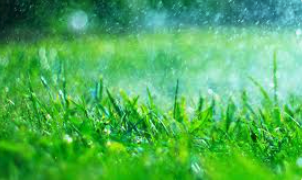
As I write this, I am watching the rain fall. Today is my regular day to cut my grass; but I cannot because it is wet. So, what do I do? Blame someone else? Rant and rave? Pout? Choose someone to sue? Maybe the local weatherman?
Or do I accept the fact that I cannot stop the rain and move on?
Grant Me Serenity
 The forecast says the sun will come out tomorrow, so I will re-schedule my chores. Like most of us, I have plenty of other things on my “to do” list, so I can re-arrange them. Those of you who know me well, will expect me to re-assess and re-prioritize. Long ago my dad slid into my backpack what is commonly known as The Serenity Prayer. “God grant me the serenity to accept the things I cannot change, the courage to change the things I can, and the wisdom to know the difference.” So with serenity, I accept that I cannot stop the rain; and remember that before there can be a rainbow, a little rain must fall.
I wonder if this is a lesson still worth teaching our children?
My Way
It seems to me that many in our society today always want things to go their way. Many can not accept change. Many cannot accept outcomes they do not want. From the score of a soccer game to finding the best parking place. Some adults think that others are taking their jobs. Some believe others are getting a better deal. Some have even questioned the outcome of government run elections.
In our society, I believe there are two basic principles that we all need to share. First, when democracy works as it should, the majority gets their way. Second, in competition, someone will win, and someone will not. And, perhaps thirdly, there will be future opportunities to change the outcomes.
Of course, we must assume that the events proceed fairly. That everyone knows and agrees to the rules beforehand. That those judging the contests will be competent, objective and unbiased. In another conversation, we may explore how those issues may be challenged if there is a legitimate concern. Can we revise the rules? Was someone given an unfair advantage? We should always look for improvement and excellence. These are all things we can focus on at another time.
But complaining just because the outcome is not what we wanted? Just because we got less votes? Because we didn’t get “our way”? Winning and losing are part of life. These are lessons we need to teach our children. How to be gracious when they win. How to be gracious when they do not. They will experience both. When they lose a contest, can they be disappointed? Sure. Should they ask themselves why? Absolutely. When they lose should they be determined to work hard, improve and do better next time? That, too. But should they always look to place blame elsewhere? On the referee? No. Should they question the rules. No. Should they deny that they lost? No. Do they curse the rain?
Measuring Ourselves
Competition is a great thing. It helps us measure ourselves and understand how we can improve. It helps us determine what can be our best selves. To predict our individual potential, so we can fulfill it. But, Desiderata reminds us, “Do not compare yourself with others, for always there will be greater and lesser persons than yourself.” In a long life, I have come to understand that in some areas I may be one of the best; yet in other areas I will always “bring up the rear”. Not winning can be one of the best lessons our children learn. Doing our best should be the goal.
No Excuses
I was a wrestler in high school. For me, the sport of amateur wrestling  provided a lesson for how to live my life. There are only two competitors. They are matched up according to size. The competition is inside where there is no impact from the weather. There is no ball to bounce badly. Just you against the competition. Your own training, your own perseverance, your own skills, your own strategy determine the outcome of a match. No excuses.
The best part comes at the end of any match, when both wrestlers return to the middle of the mat in front of the crowd. One is declared the winner and the other stands by. Maybe the one with their arm held aloft was just better that day. Maybe one made a mistake. Maybe one wrestler had trained harder. Maybe one competitor was just more skilled. Doesn’t matter. There are few better learning experiences than standing in that circle. You cannot run and hide. You knew the rules. You trusted the referee to do their best. You accept the outcome. You live to compete another day.
In Adam Grant’s book, Think Again, he suggests that we can benefit when we make mistakes or don’t achieve the expected outcome. We are forced to look for the correct answers or the better way to achieve success. We seek wisdom. We change the things we can. Regardless of the activity or endeavor, we can resolve to work harder, seek advice, practice more, and refine our skills.
Do Your Best; Always Be gracious
No matter what the competition, some people may rarely have their hands raised in victory. Others will seem to have more success. President Jimmy Carter told us, “Life is not fair.” So, the important measure is whether all have done their best. It is up to us to teach our children. Play by the rules. Work hard. Do your best. Sometimes your will win, sometimes you will not. Always be gracious. Accept the things you cannot change. Change the things you can. Learn the difference. Be a beacon of serenity, courage and wisdom for the world to see. Look for the rainbow.