
“There are no strangers here. Only friends you haven’t met yet.” William Butler Yeats
Our Responsibilities
Recently I watched an episode of former President Obama’s podcast, A Great Book with Barack Obama.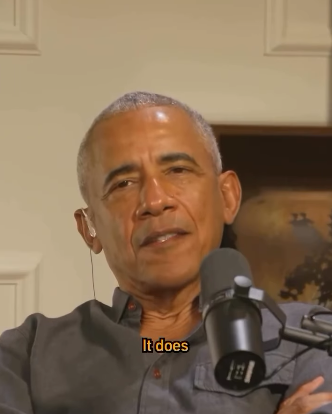 Tom Hanks was his guest. During the interview Mr. Hanks expressed his thoughts about our responsibilities as human beings. In sum, he said the two most important things on which we should judge ourselves are how we raise our children and how we treat strangers.
We all know how I think about the responsibility to raise our children. I have written, “Of all the things we do in our lives, as adults and parents, the most important may be to teach and guide our children.” Take them by the Hand. I think this is a responsibility that most dads know. If we have children, we should accept that parenting and taking care of our family becomes our responsibility. While fulfilling that responsibility may come in many forms, caring for our children is our ultimate priority.
Grace, Understanding and Presence
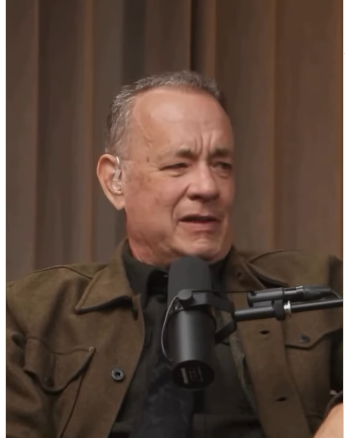 Calling upon the founding principles of our country…that all men are created equal... Mr. Hanks suggested that how we treat strangers is how we might evaluate ourselves as a country. He resolved that engaging strangers requires us to “show grace, understanding and be present” for all others. Mr. Hanks’ comments called me to reflect upon this second responsibility. How we treat others; and, how we merge that with raising children. Are we teaching them how to engage with strangers and the value of doing so? Are we teaching them the powers of grace, understanding and presence?
Never Talk to Strangers
I’ll pause for a moment and remind us all that as children we were taught to “never talk to strangers”. In this day and age of social media and other vulnerabilities, that warning has become even more important. That is not my point here. That cautionary rule still holds true. My thoughts focus on how our children learn to engage with their peers, mentors and teachers; how to make friends; to develop healthy relationships and to treat all persons with dignity and respect. More broadly, how do we guide a generation to be more accepting of others and willing to serve their neighbors?
The Value of Engagement
The current research tells us that children are becoming more isolated. There are many reasons. The advancement of technology is surely one of those reasons. On the other hand, research also points to the value of children engaging with their peers. Learning how to have face to face conversations. How to resolve disputes. How to make friends. How to build and sustain long term personal relationships. I believe the list also includes the value of interacting with others who are yet unknown to us. And learning to love our neighbors.
Recent surveys reveal that many young people are unhappy. They are losing faith in their lives. Apparently, a smaller and smaller percentage seem to believe in others. Unbelievably, many in the younger generation think that someone is out to get them. I wonder if these feelings might change if they knew strangers could become their friends.
A Friend Behind a Stranger’s Face
Let’s continue with a quote from Maya Angelou. “A friend may be waiting behind a stranger’s face.” Think about it. During our children’s days at school, there will always be others who begin as strangers. Even if our children know their names, they may be strangers in fact. A team mate on a soccer team. A fellow student in math class. The kid who seems to be lonely on the playground. That kid sitting alone at lunch. The new kid on the school bus.How many of our current adult friends entered our lives one of these ways? How many of us started out unrecognized? At one point, weren’t we all strangers?
Approaching Strangers Safely
We should encourage and help our children to identify others they can connect with in a safe way. By  including everyone in the playground game. Inviting someone to join the group at the lunch table. Sharing a seat on the bus. Saying hello to the new kid as he enters math class. Such simple acts are signs of grace, understanding and presence.
Relationships and Community
If we encourage our children to understand that strangers can become friends; they will see value in reaching out to others. They may appreciate the idea that strangers are friends waiting to be found. They may have the motivation to establish relationships and build communities. To work together and pursue what is right. Just believing that strangers may be friends will cause them to treat others with respect and dignity. “Do not neglect to show hospitality to strangers, for by doing so some have entertained angels without knowing it.” Hebrews 13:2 You never know who you may be greeting … until you do.
Dads should be role models for our children. Show them how to engage with strangers. Take time to speak to others as you go through your day. To the parent in car pool line, the person in the queue at the home improvement store, the older gentlemen walking his dog. On my daily runs I often see the same people who run or walk at the same time. In the few moments we stand together at the traffic light, I have smiled and said “how are you?” If the response is positive, next time I will try again. “nice weather today, eh?.” These brief interactions “break the ice” and begin to take away any apprehensions they have about me as a stranger.
Thereafter, we often share a smile and wave as we pass on the sidewalk. These acquaintances begin to trust me, and they move on the continuum from strangers towards friends. At the least, they become my “neighbors”. In doing so, we slowly become a part of a community that cares about each other. Some days we have encouraged each other. I know if I ever have trouble on my run, those folks will come to my aid. Like the Good Samaritan, they will be my neighbor. I like to think they might join me to resolve more important issues if I ever had to call on them. I believe I would do the same.
Are You From …?
I am a stranger. You are a stranger. We have that in common. Think about the times we have been away from home, and we encountered someone from our hometown, college or some other common point of reference. We immediately engage. We do not question their religion, politics, likes or dislikes. We simply recognize that we are both from the same “neighborhood”. We immediately move from being strangers to accepting each other as neighbors. A positive interaction ensues. We delight in our commonality.
I wonder what might happen if we broadened our definition of “neighborhood” and treated everyone like 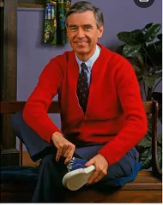 they were part of our community? What if we were excited because everyone we met every day was from our neighborhood? Wouldn’t Mr. Rogers be proud of us? “If a man be gracious and courteous to strangers, it shows he is a citizen of the world.” Francis Bacon.
And so we come full circle. Tom Hanks suggests that our responsibility as part of a community is to care for the strangers. It seems a lesson worth teaching our children.